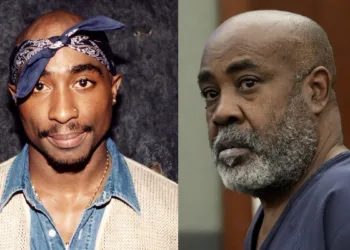





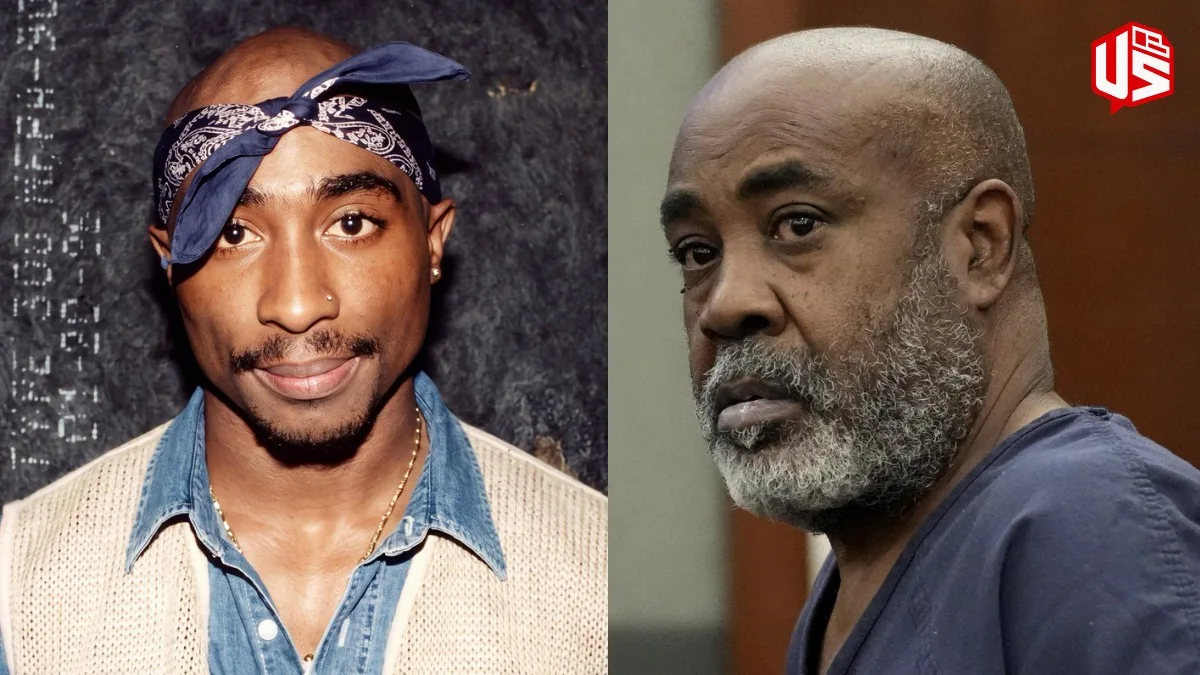
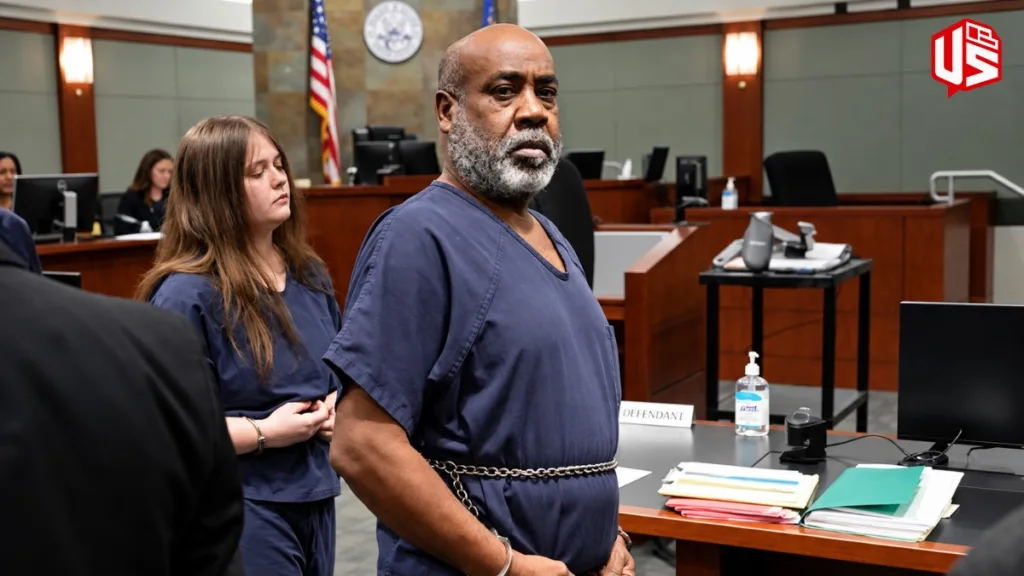
Justice has arrived, three decades later. Duane “Keefe D” Davis, the only man ever charged in the murder of Tupac Shakur, was sentenced on Tuesday, October 13, to 40 years to life in prison for orchestrating the 1996 killing that shocked the hip-hop world. Judge Carli Kierny of the Clark County District Court in Las Vegas delivered the sentence in an emotional hearing, with Shakur’s family present in the courtroom.
Davis, 63, a former leader of the South Side Compton Crips, was found guilty in August of first-degree murder with a deadly weapon. The sentence includes a mandatory 20-year enhancement for profiting from the crime, bringing the total to 40 years before he can be considered for parole.
The Judge’s Verdict: “The World Never Forgot Tupac”
Judge Kierny showed no mercy when addressing the convicted man. With Tupac’s sister, Sekyiwa “Set” Shakur, in the room, her words were a direct blow to Davis’s conscience:
“You can’t take a man from his family, you can’t take his life, his entire future, and just move on. Especially when that man is Tupac Shakur.”
The judge added that although justice took 30 years, “the world never forgot Tupac.” “It took us 30 years, but at this moment you will face justice for what you did on September 7, 1996,” she declared.
Tupac’s Family: “My Brilliant Brother, My Prince”
Before the sentence was handed down, Tupac’s relatives had the opportunity to address the court. Sekyiwa Shakur, visibly emotional, recalled the impact her brother’s death had on her life and her entire family:
“The loss of Tupac Shakur, for a long time, paralyzed my entire family emotionally and mentally. He is truly my shining star, my shining prince, the one God entrusted to take care of me.”
Her words resonated powerfully in a room where Davis, according to witnesses, remained stone-faced and even rolled his eyes as he listened to the victim’s sister testify. When the judge asked if he wanted to say anything, Davis simply replied: “No, I’m good,” and requested the return of belongings police had confiscated from his home, including photographs.
How Davis’s Own Words Convicted Him
The Tupac Shakur case remained unsolved for nearly three decades. No one was charged with the rapper’s murder, who was shot on September 7, 1996, while riding in the passenger seat of a black BMW driven by Marion “Suge” Knight, founder of Death Row Records. A white Cadillac pulled up alongside the vehicle at a stoplight near the Las Vegas Strip and opened fire. Tupac was hit multiple times and died six days later.
The case was revived in 2018 when Davis published his memoir “Compton Street Legend” and began giving interviews in which he openly admitted his involvement in the crime. According to his own account, he ordered the attack in retaliation because hours earlier, Shakur and his entourage had beaten his nephew, Orlando “Baby Lane” Anderson, inside the MGM Grand casino. Davis claimed he was in the passenger seat of the Cadillac and passed the gun to the back seat, from where the shots were fired.
The prosecution based much of its case on those statements. Prosecutor Marc DiGiacomo argued that Davis tried to profit from a crime he himself committed, and therefore did not deserve the minimum sentence: “In my mind, he deserves the maximum possible sentence. He is guaranteed to die behind bars.”
The Defense and the Appeal: “They Waited Too Long”
Davis’s attorney, Michael Sanft, announced he will appeal the conviction. His main argument is that the prosecution waited too long to file charges, and that the delay violates his client’s rights. “They waited too long to bring this case,” Sanft said after the sentencing. The defense also argued during the trial that Davis’s statements were essentially fiction, meant to boost his notoriety and sell books, not real confessions.
Davis himself had previously said in interviews that he expected to walk free thanks to the appeal. “I’m not worried. I’m going to win on appeal. We filed it before the trial even started. They violated my civil rights,” he told the Hollywood Reporter.
A Case That Defined an Era
The murder of Tupac Shakur not only ended the life of one of the most influential rappers of all time, but also became a symbol of the violence that marked the East Coast–West Coast hip-hop rivalry in the 1990s. Shakur’s death, followed months later by the murder of The Notorious B.I.G., left an open wound in hip-hop culture that took decades to begin to heal.
The 40-year sentence at age 63 effectively means life in prison. Davis, who already suffers from health problems, will die behind bars. Justice has arrived, but for the Shakur family, the pain will never fully go away. As his sister Sekyiwa said: “He is my shining star, my shining prince.” And now, at last, someone is paying for having taken that light away.
Do you think the 40-year sentence is fair after nearly 30 years of waiting? Do you think Davis’s appeal will succeed? Let us know in the comments.